

Why the Ceiling You've Hit Isn't About Getting Better at the Work
2026
Developed By
Adeoluwa Abraham
”At some point the work stops being the problem. You've proved you can deliver, and still the right clients aren't finding you. That's a perception gap, not skill gap, and it requires a different fix.
Adeoluwa Abraham
There is a particular kind of frustration that comes when you’ve done great work that isn’t producing the results it should. You have delivered. You have clients who would vouch for you without hesitation. You have results you can point to. And yet something isn’t translating. The caliber of client isn’t quite where you want it, the pipeline isn’t as full as your track record warrants, the rooms you’re being invited into don’t yet reflect what you’re actually capable of.
The temptation, when you’re in this position, is to look inward, to wonder if the work needs to be better, if you need another credential, if there is some capability gap you haven’t yet closed. Sometimes that’s true. But more often than most founders want to admit, the gap isn’t inside the work. It’s between the work and how the work is being seen.
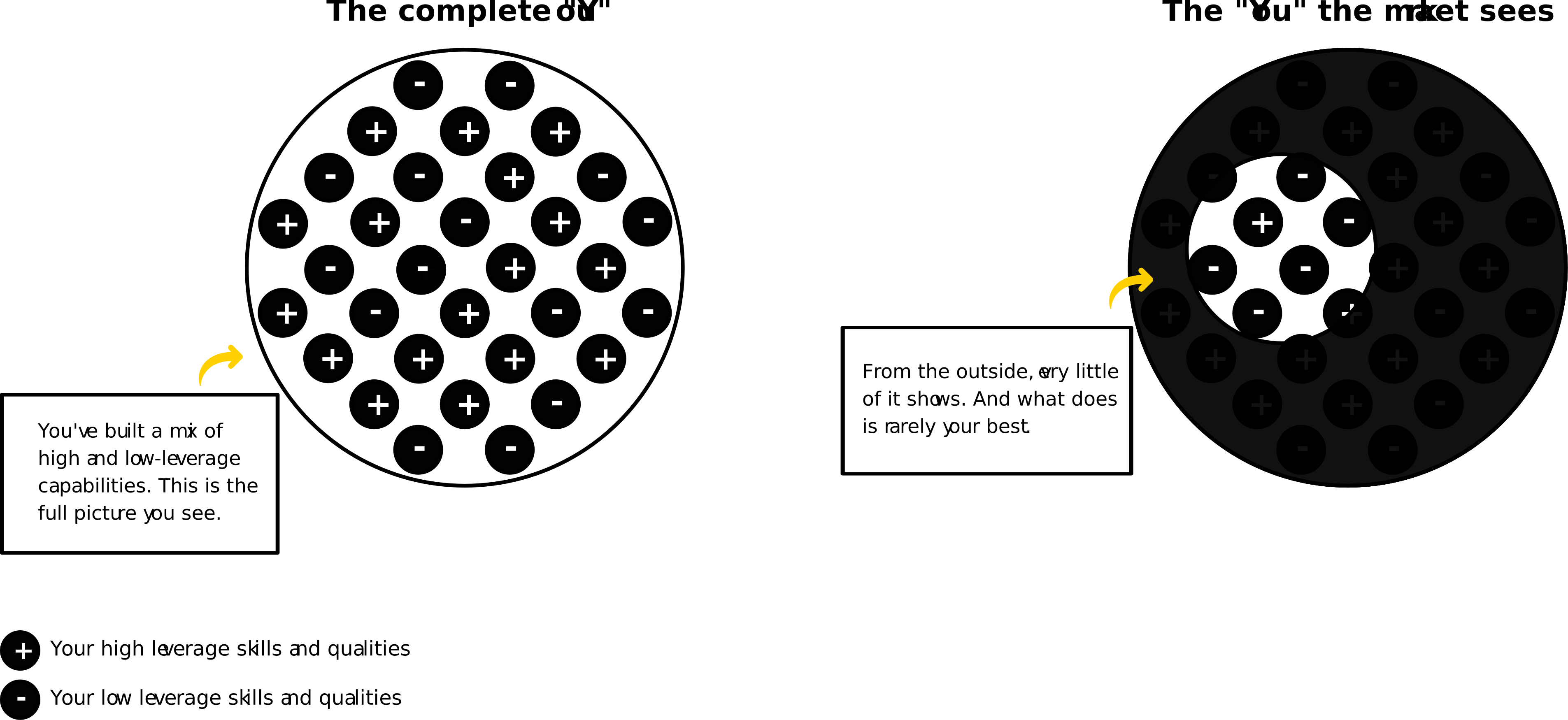
The market doesn’t reward capability. It rewards perceived capability. And those two things are not always the same.
The market can only act on what it can see
This is not a comfortable truth, but it is a useful one. The quality of your work exists inside the experiences of the clients you have already served. It lives in the results you’ve produced, the problems you’ve solved, the moments where you delivered something that genuinely changed things for someone. All of that is real, and all of it matters.
But the client you haven’t worked with yet can’t access any of it directly. They are working with a much thinner picture: whatever they’ve heard about you, whatever they’ve seen from you, whatever impression has formed in the absence of direct experience. And that thinner picture is what they are making decisions from. It is what determines whether your name comes up in the right conversation, whether you get the call, whether you walk into the room as a serious contender or as one of several options they’re still evaluating.
The ceiling, for most capable founders, is not what they can do. It is what the right people believe they can do, before they’ve had the chance to prove it.
The gap nobody talks about
What makes this particularly tricky is that the gap between capability and perception is largely invisible from the inside. You know what you’ve done and what you’re capable of. It is difficult to see clearly how that is, or isn’t, landing with the people who haven’t experienced it firsthand.
The founder who has spent a decade doing exceptional work for a contained circle of clients has a reputation that is deep but narrow. The people inside that circle know exactly what they have. The people outside it have almost nothing to go on. And because the founder’s experience of their own work is rich and detailed, it can be genuinely difficult to appreciate how thin the picture looks from the outside.
This is why capable founders stay stuck at a certain tier longer than they should. The next level has been earned, but the signal they’re sending hasn’t caught up with the substance behind it. The work is there. The perception is still forming.
A reputation confined to the people who already know you is not yet an asset. It is potential waiting to travel.
Capability vs Perception
The responsibility nobody asked for
Here is the part that can feel unfair: closing the gap between capability and perception is your responsibility. Not because the market is right to underestimate you, and not because good work shouldn’t speak for itself, but because waiting for the market to catch up on its own is a strategy with a very poor track record.
The founders who break through to the next tier are almost never the ones who simply kept their heads down and did better work. They are the ones who, at some point, made a deliberate decision about how they wanted to be understood, and started doing something about it. They got clearer on what their work actually stood for. They found ways to let that clarity travel beyond the rooms they were already in. They stopped leaving their perception entirely to chance.
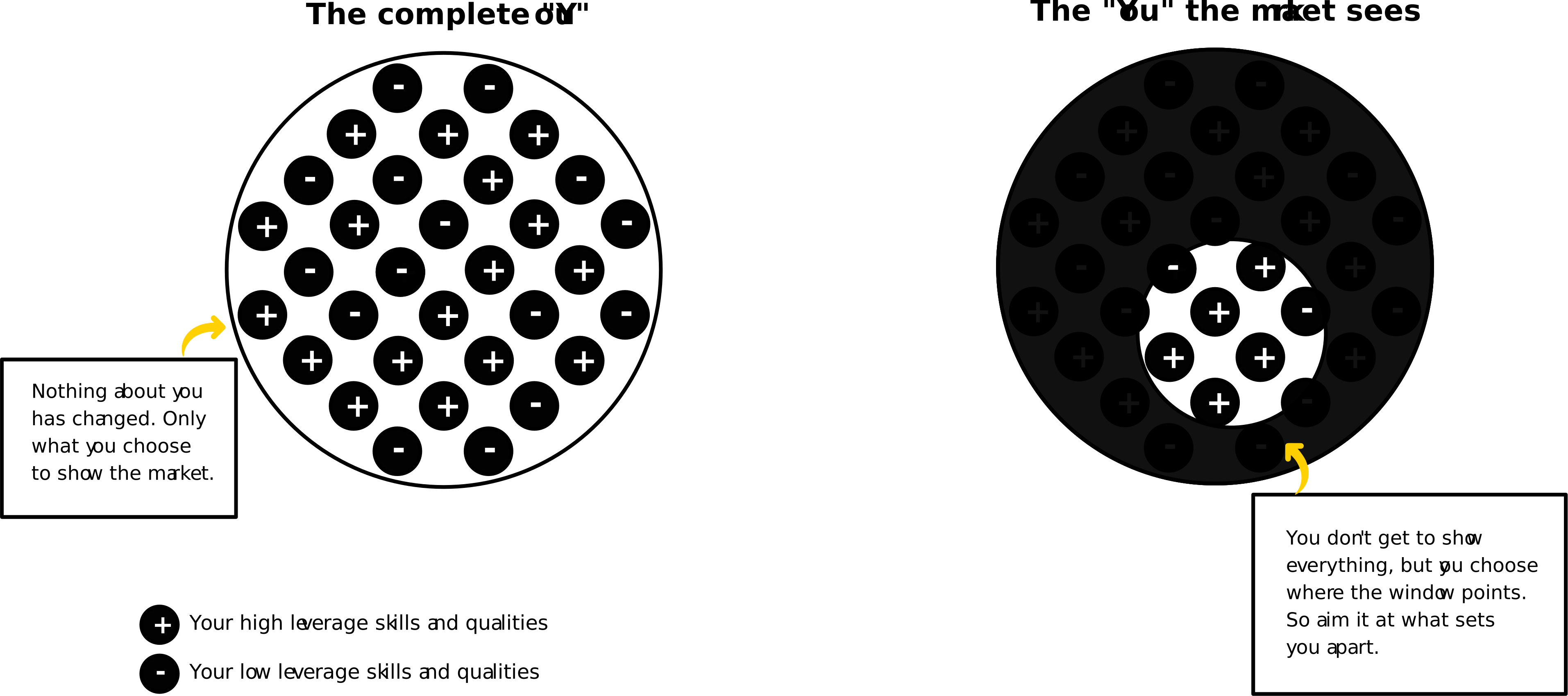
None of that requires becoming someone you’re not. It doesn’t require a personal brand overhaul or a content strategy or a public profile you’re uncomfortable with. It requires something more specific and more manageable: an honest look at the gap between how you are currently being seen and how you need to be seen, and a decision about which part of that gap to close first.
Capability vs Perception
The ceiling is not permanent
The good news, and it is genuinely good news, is that perception is not fixed. It is not a verdict. It is a picture that is always in the process of being formed, and it can be shaped with more intention than most founders apply to it.
The capability you have built is real. The results are real. The question is whether the picture that exists of you in the market, in the minds of people who haven’t worked with you yet, in the conversations happening in rooms you’re not in, is anywhere close to reflecting that reality.
For most founders doing genuinely good work, it isn’t. And that gap, frustrating as it is, is also the most addressable thing standing between where you are and where your work deserves to take you.
What the work that follows is for
What comes next, across the rest of this work, is a way of seeing that gap clearly enough to act on it. The picture that exists of you in the market is not random and it is not fixed. It is produced by a chain of three things: what you put out into the world, what travels when other people speak about you, and what accumulates as influence by the time you walk into a room. Signal, Name, Weight. They form a chain, and that chain has a direction and a logic. Most founders who have hit a perception ceiling have one specific link in that chain doing less than its share of the work. Find the link, repair it, and the ceiling moves.
The ceiling isn’t your capability. It never was. It’s the distance between what you’ve built and how clearly the right people can see it, and that distance is produced by a chain you can see, name, and repair.